
Sec 2G1: Upcycling Old School Uniforms and the Circular Economy
Sec 2G1 students discover the circular economy by upcycling old school uniforms into new creations through an interdisciplinary journey spanning ALP, CCE, and English Language — from hands-on workshops and TikTok advocacy to leading community sewing sessions, learning to see not waste, but possibility.
Sec 2G1: Upcycling Old School Uniforms and the Circular Economy
How does upcycling contribute to sustainable living?
What if the uniform you outgrew could become something new? For our Sec 2G1 students, that question is not hypothetical; it is the starting point for a journey into the circular economy. Through their PCM journey, they bring together Applied Learning Programme (ALP), Character and Citizenship Education (CCE), and English Language to explore how upcycling can shift the way we think about the things we own, use, and discard. Anchored in the big idea of Change — in mindset, in action, and in the way we see the world — students are challenged to rethink what it means to live sustainably, one old uniform at a time.
Expose — Seeing value in what we overlook
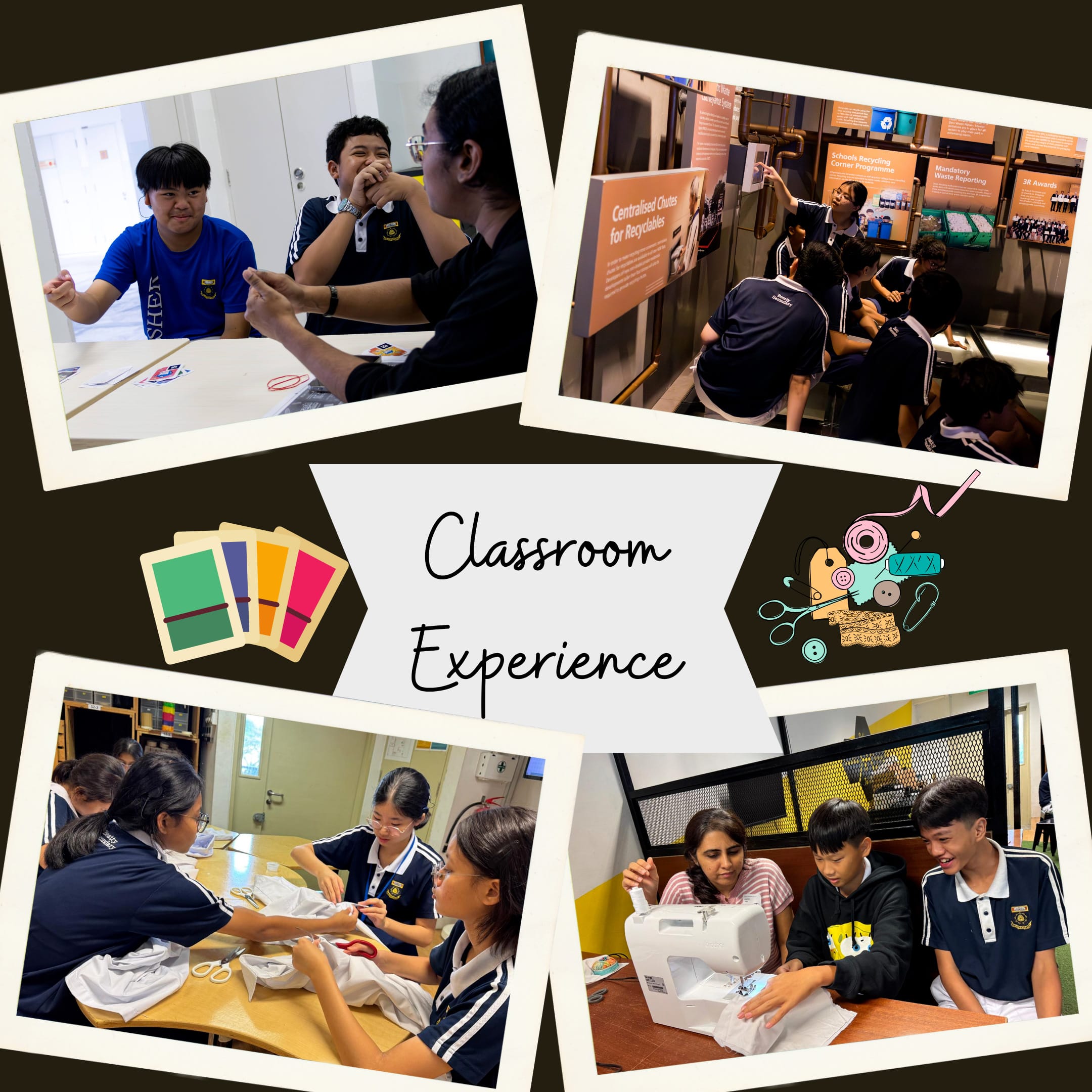
Before students can reimagine waste, they need to understand why so much of it exists in the first place. Through English Language, they explore the principles of upcycling and the circular economy by watching, reading and reflecting on how a shift away from "take, make, throw" thinking can make a real difference. To make these ideas concrete, students play Bloobin, a card game that challenges them to think through the logic of recycling in an interactive way. The ideas come to life even further in a hands-on workshop by The Circular Classroom, where students work with old school uniforms to create pencil cases that carry the story of what they once were. Through ALP, the bigger picture comes into focus. These creative acts of transformation connect directly to UN Sustainable Development Goal 12, Responsible Consumption and Production, showing students that sustainability can be as tangible as the fabric in their hands.
In CCE, learning steps outside the classroom. A learning journey for all Sec 2 students to the Sustainable Gallery gives them a broader view of what a circular economy can look like in practice, and they leave with more than just new knowledge when they create tote bags from old clothing. It is a tangible reminder that sustainable living is something they make, not just something they study.
Empower — Making the case for change
Understanding upcycling is one thing. Convincing others of its value is another. In English Language, students are placed in the middle of a real-world scenario about how upcycling can contribute to sustainability, and asked to do more than just describe it. They must analyse the issue, advocate for change, and propose practical solutions, but from two very different standpoints: schools and residents. The result is a 2-minute TikTok that captures both perspectives, bringing out the different motivations, concerns and possibilities that shape how communities engage with the circular economy.
Engage — Passing it on
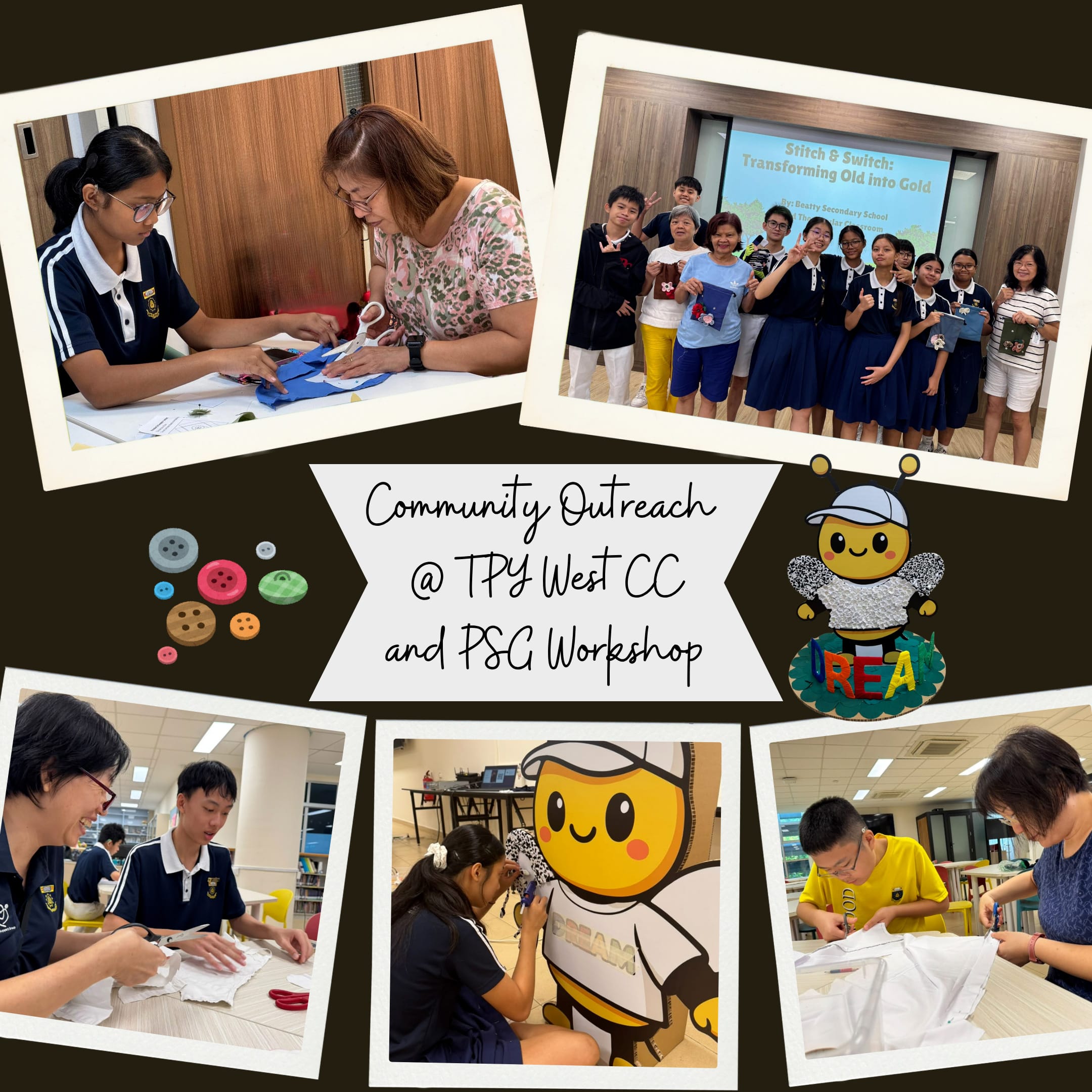
The real test of learning is whether you can share it. Students bring their upcycling skills directly to the community, running a workshop at Toa Payoh West Community Club, supported by The Circular Classroom, where residents learn to use sewing machines to repurpose old school uniforms into vanity bags. The energy carries into school as well. Together with Parent Support Group members, students put together a bee mascot crafted entirely from upcycled uniform fabric, a symbol of what community and creativity can build when nothing goes to waste.
Growing as Changemakers and Purpose Driven Stewards
An old uniform is easy to overlook — faded, outgrown, destined for the bin. However, through this unit, students learn to see it differently: as material with a second life, and as a small but meaningful opportunity to close the loop. They come away not just with new skills but with a new way of looking at the things around them, asking not "is this still useful?" but "what could this become?"
This is what sustainable living looks like when it takes root: not grand gestures, but a quiet shift in how we value what we have. And it begins here, with a Beattyian who has learned that in a circular economy, the end of one thing is always the beginning of something else.