
Sec 2G2: Reducing Food Waste and Embracing 'Ugly Food'
Sec 2G2 students tackle Singapore's food waste problem through an interdisciplinary journey spanning English Language, ALP, and FCE — learning to cook with "ugly food," create eco-products, and lead community workshops, emerging as changemakers who see possibility in what others discard.
Sec 2G2: Reducing Food Waste and Embracing 'Ugly Food'
How can we reduce food waste in our society?
Every day, tonnes of food are thrown away across Singapore, much of it perfectly edible. For our Sec 2G2 students, this is not just a statistic. It is a problem worth solving. Through their PCM journey, they bring together Applied Learning Programme (ALP), English Language, and Food and Consumer Education (FCE) to take a hard look at how and why food gets wasted and what each of us can do about it. Anchored in the big idea of Change — in mindset, in action, and in the way we see the world — students are challenged to rethink their relationship with food from the ground up.
Expose — One issue, many lenses
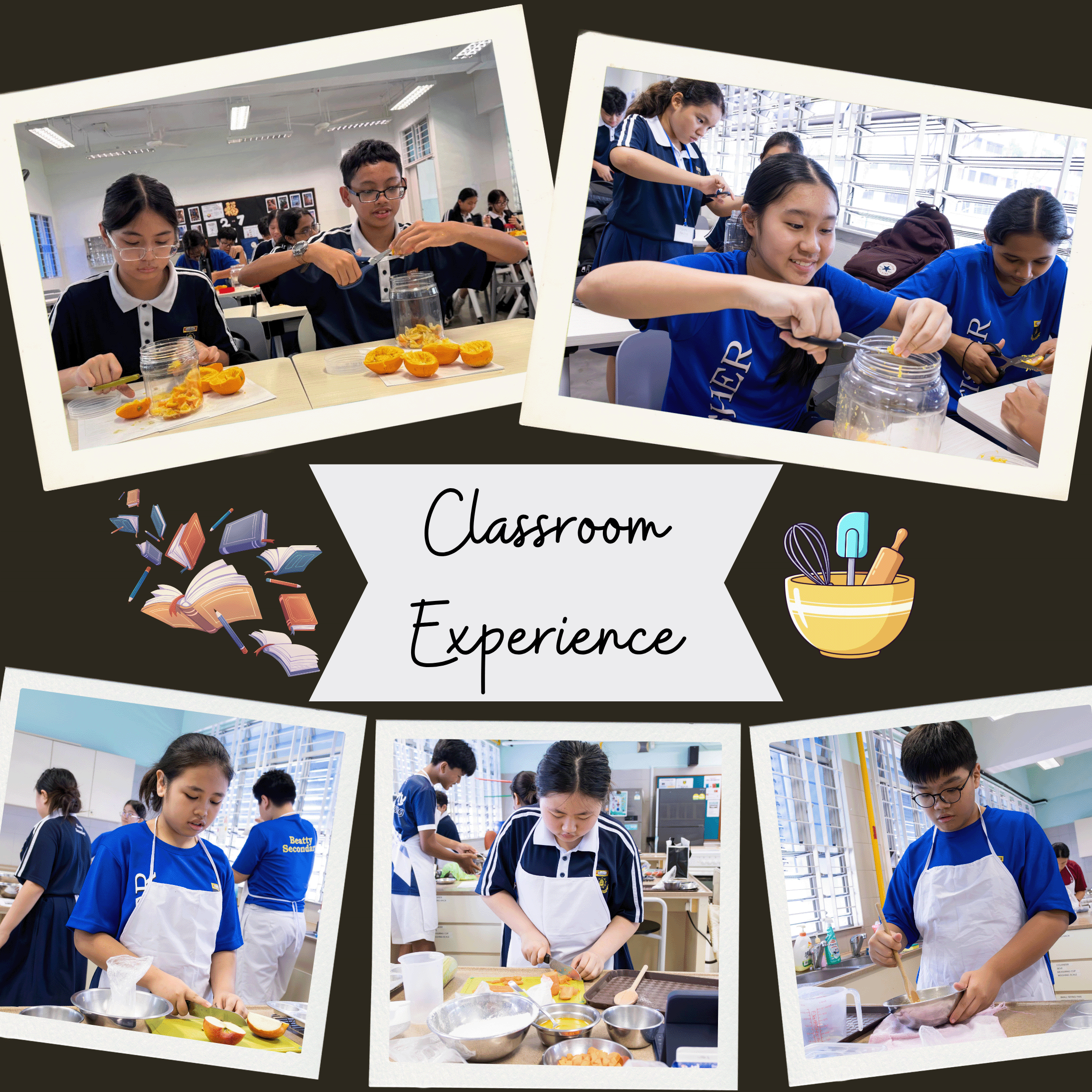
Before students can change their habits, they need to understand them. Through English Language, they dig into Singapore's food waste challenge — watching, reading, and reflecting on efforts like community food rescue initiatives that are already making a difference. A hands-on workshop by Green Nudge takes things further, showing students that reducing waste can be as practical as turning orange peels into eco-detergent. In FCE, the kitchen becomes a classroom: all Sec 2 students explore plant-based ingredients and zero-waste cooking, discovering that sustainable choices can be both delicious and creative. Through ALP, the bigger picture comes into focus. These everyday decisions connect directly to UN Sustainable Development Goal 12, Responsible Consumption and Production, reminding students that what happens on their plates is part of a global conversation.
Empower — A voice and recipe for change
English Language becomes the thread that pulls the disciplines together. Given a real-world scenario about food wastage, students are challenged to analyse the problem, advocate for change, and propose practical solutions. They step into the perspectives of two very different stakeholders: food stall owners and consumers. The learning culminates in a 2-minute podcast where they give voice to both sides of the conversation, exploring the tensions and shared responsibilities that shape how food waste happens, and how it can be reduced.

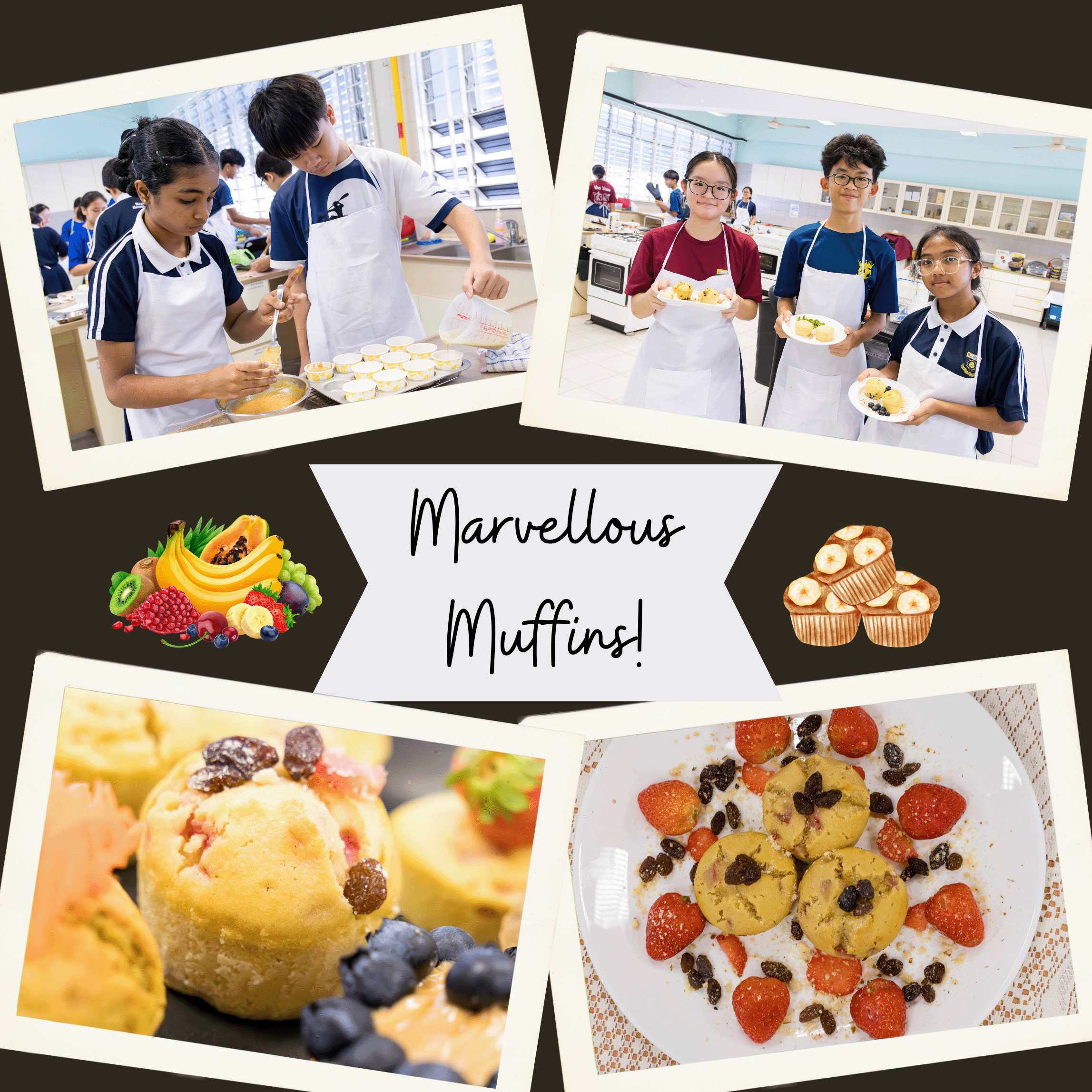
In FCE, students take sustainable living into their own hands, quite literally. They prepare an appealing and nutritious muffin for a senior, using the all-in-one method of cake making. Each recipe must include ugly food or a plant-based ingredient, pushing students to find value where others might see waste.
Engage — From learners to guides
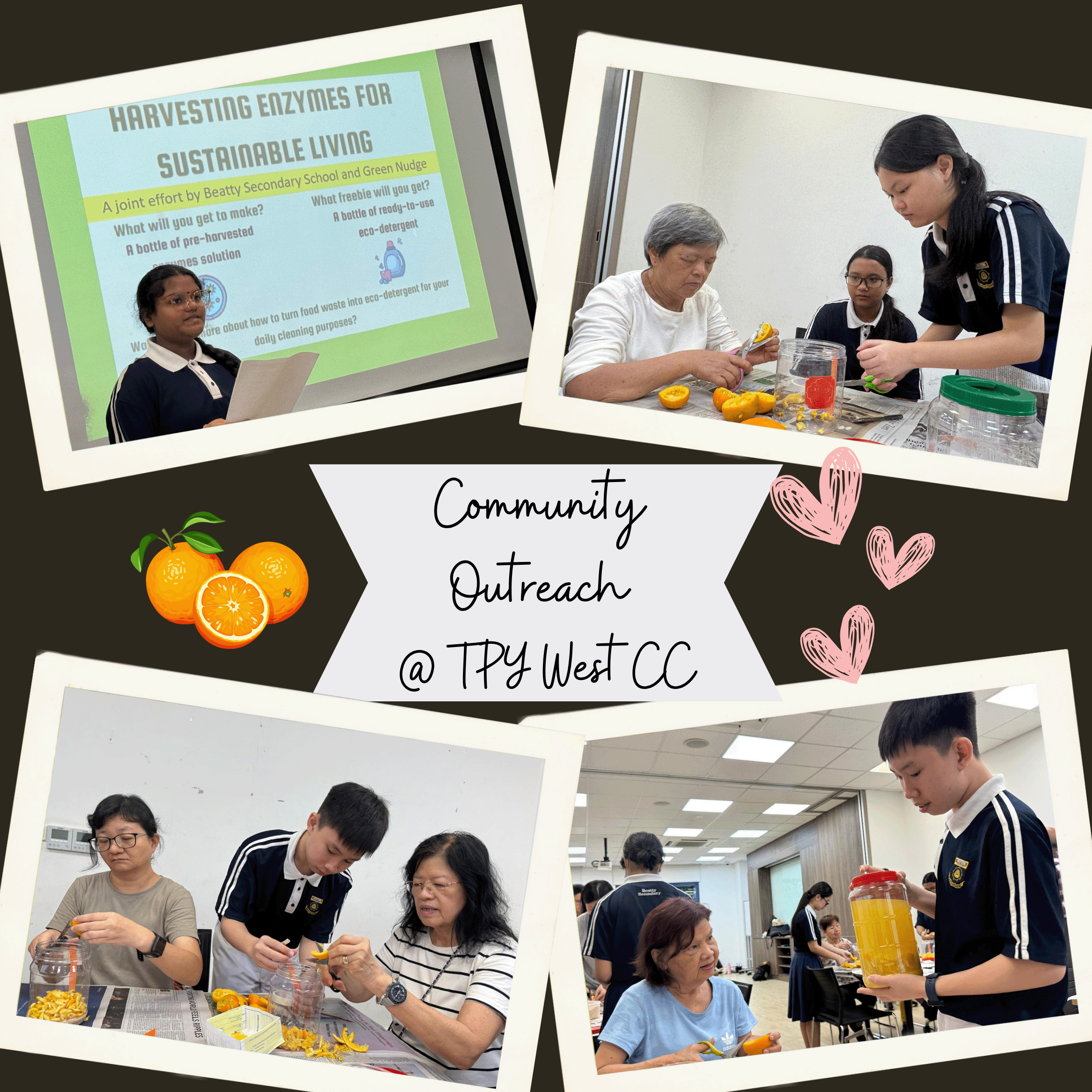
Equipped with new skills and a fresh perspective, students take their learning out into the community. At Toa Payoh West Community Club, they run a workshop teaching residents how to make eco-detergent from orange peels — something they learned themselves, now passed on. It is a moment that matters: students realise that they are not just receivers of knowledge, but carriers of it, capable of sparking change in the people around them.
Growing as Changemakers and Purpose Driven Stewards
Food is something every person encounters multiple times a day, which means every Beattyian already has the power to make a difference. Through this unit, students come to see their daily choices not as small or insignificant but as part of a much larger story about how we care for our resources, our communities and our planet. They leave not just with knowledge about food waste, but with the confidence to act on it in their kitchens, in their conversations and in the communities they are part of.
This is what sustainable living looks like in practice: not a distant ideal, but a habit built one thoughtful choice at a time. And it begins here, with a Beattyian who has learned to look at an orange peel or an imperfect vegetable and see possibilities rather than waste.